The Orthodox fasting calendar: a simple guide to the year
The major fasting seasons, what "relaxation" of the fast means and why your spiritual father is your best guide.
Read more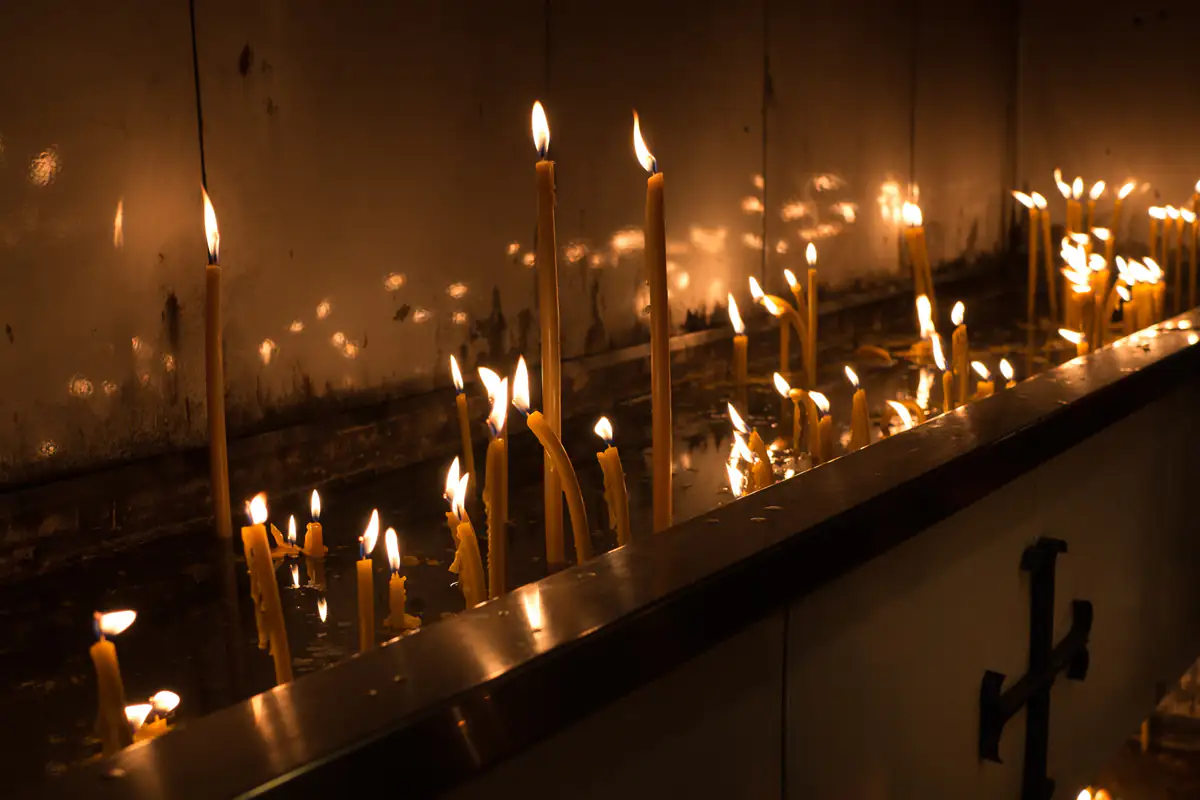
Losing someone close is hard, and the first weeks bring a lot of practical questions. When is the first memorial? How many memorials do we hold? Who prepares the kollyva? This guide brings together what is customary in most Orthodox parishes, so that the family can focus on what matters: praying for the person they love.
The memorial service, known in Greek as the mnimosyno, is the Church's prayer for those who have fallen asleep. It is usually held in church after the Divine Liturgy, often on a Sunday or a Saturday. The family brings the names to be remembered, the kollyva and anything else that is local custom, and the priest commemorates the departed together with the community.
Customs vary from place to place, but the most common are:
Many families also remember their loved ones on the Saturdays of Souls. The date need not fall exactly on the anniversary; families usually choose the nearest Sunday or Saturday that suits both them and the priest. There are also times when memorials are generally not held, such as Holy Week, the week after Pascha and certain major feasts. Your parish priest will tell you what applies.
The Trisagion is a short service of prayer for the departed. It can be held in church, at the graveside or at home, and is often said on days when a full memorial is not held. If you would like a Trisagion at the grave, ask the priest when he is able to come.
Kollyva is boiled wheat, a symbol of the resurrection, usually mixed with nuts, raisins, pomegranate seeds, sesame and parsley, then covered with icing sugar. Some families make it at home; others order it. If you make it yourselves, boil and drain the wheat the day before so that it is properly dry.
On Sundays before great feasts, or on the Saturdays of Souls, several memorials are often held together, so it helps to get in touch early. Ask whether the parish has its own practice regarding the time, the kollyva or the offering, and whether names need to be given in advance. A short phone call saves the family a great deal of worry on the day itself.
If the memorial falls during a fasting period, our guide to the Orthodox fasts of the year may help you plan the refreshments afterwards.
Convivia helps parishes keep track of memorial services and remind families of upcoming dates. Explore the features.
The major fasting seasons, what "relaxation" of the fast means and why your spiritual father is your best guide.
Read moreA baptism is a joyful day. A little planning around the paperwork keeps it that way.
Read moreA practical guide to moving your parish register to digital without the stress.
Read moreTell us how your parish works and we will show you how Convivia can help.